
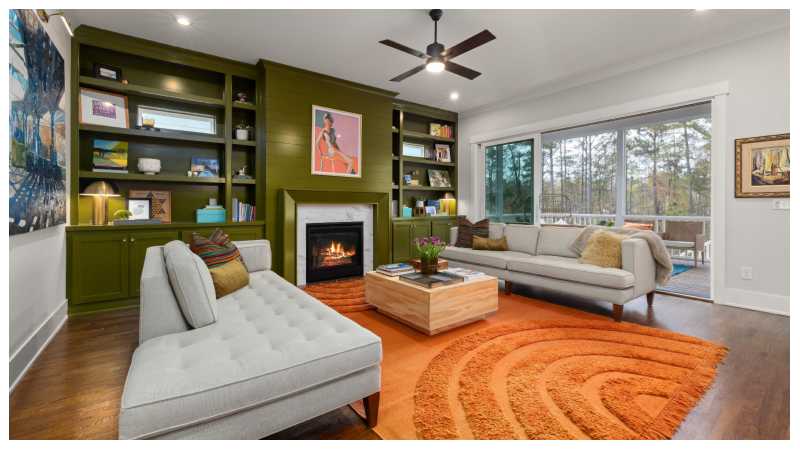
Entertainment rooms date surprisingly quickly.
Usually it isn’t the sofa or the paint colour that causes the problem.
It’s the technology built around them.
A television gets replaced. A games console disappears from everyday use. Streaming habits change. Five years later, the room is still arranged around equipment nobody owns anymore.
The better approach is to build the room around change.
Put the boring infrastructure in first
The easiest time to run a cable is before the wall is finished.
Obvious, yes. Still one of the things people regret later.
CEDIA’s current smart-home guidance recommends installing conduit and leaving extra cable capacity during construction or renovation. Pulling a new cable through an empty conduit is much easier than opening a finished wall.
You don’t have to know what the next display standard will be.
You just need somewhere for the next cable to go.
The same applies behind a television or projector position. A spare route between the display and the equipment cabinet may be worth more in five years than an expensive cable chosen today.
Add more power than you think you need
Entertainment equipment has a habit of multiplying.
A television might start with one console underneath it. A couple of years later, something else has appeared beside it.
Running extension leads around furniture works, but it isn’t much of a renovation plan.
Extra sockets are cheap compared with altering the electrical work once the room is finished. Placement matters too. Power behind a wall-mounted display is useful, but you may also want it close to seating or wherever the AV equipment ends up.
Leave a little room for whatever hasn’t been invented yet.
And add more outlets. Trust me, you’ll need them.
Furniture should be easier to replace than the room
A built-in unit designed perfectly around today’s television can look very clever.
Then the television changes size.
Modular furniture is less committed. A low cabinet can move. Shelving can be adjusted. A table can disappear if the room later needs more floor space.
This matters even more in a smaller home where the same room may have to do several jobs.
A gaming setup in the evening might become a film room at the weekend. During the day, someone may need the same space for work.
Furniture that can shift makes that possible without another renovation.
The room doesn’t need to decide what it wants to be forever.
Don’t trap hot equipment in a cabinet
AV equipment produces heat, and enclosed furniture can make that worse.
Manufacturers still publish ventilation requirements for things like receivers. Denon, for example, recommends leaving a fair amount of space above its AV units rather than packing them tightly into a cabinet.
Worth thinking about before the furniture is built.
A solid-backed cabinet with barely any airflow may look tidy. It can also be a miserable place for equipment that stays warm for hours.
Open-backed sections help. Hidden ventilation can too.
A small fan is easier to add than another amplifier.
Make the display replaceable
Screens change faster than walls.
That’s reason enough not to make the whole room depend on the exact dimensions of one television.
Wall mounts have become fairly standardised, but screen sizes and mounting patterns still vary. Sony’s 2026 documentation, for example, shows different VESA patterns across its range.
Leave enough clear wall space for the next display.
The same idea works with a projector. The mounting point may stay, but access to power and signal cabling shouldn’t depend on one particular model.
A replaceable screen is normal.
A wall built around one screen is the awkward bit.
Lighting should work when the screen is off too
An entertainment room rarely needs one lighting mood.
Watching a film asks for something very different from cleaning the room or working at a desk.
That doesn’t mean filling the ceiling with complicated smart lighting.
It just means avoiding a setup where your only useful choices are harsh overhead light or darkness.
Separate circuits, dimming and a couple of well-placed lamps leave much more room to change things later. Smart controls can be added if they actually solve a problem.
The lights should still make sense even when nobody is watching anything.
The network matters more than it used to
A decade ago, an entertainment room could get by with a television signal and perhaps a console.
Now a lot of the entertainment arrives through the network.
CEDIA still recommends wired infrastructure for media rooms because Ethernet gives you predictable bandwidth and reliability. Its current guidance also suggests leaving enough network capacity behind large displays for whatever comes next.
Wi-Fi still matters, of course.
The mistake is making every device fight for the same wireless connection when a cable could have gone into the wall during renovation.
Once the plaster is finished, “easily” disappears.
Don’t build the room around one service
Technology changes faster than furniture.
A room designed around one console or streaming box can feel oddly specific a few years later.
The better question is whether the layout still works when the content changes.
One night it might be cloud gaming. Another, live sport. Someone else may use the same screen for the Bet Jordan Online Casino Website, and the next owner may never open it at all.
The room doesn’t need to care.
It needs a good screen position, somewhere comfortable to sit and enough power and network capacity for whatever ends up plugged in next.
That’s the bit worth fixing into the building.
Leave some things unfinished
There is a temptation during renovation to solve everything permanently.
Exact shelves. Tight recesses. Cables planned down to the last centimetre.
A little unused capacity is often more useful.
An empty conduit is not wasted space. Neither is a spare socket.
Five years from now, one of them may suddenly make perfect sense.